COURTYARD HOUSE
RESIDENTIAL
Location Willamette, Oregon, US
Program Private residence
Area 277 m² / 2,981 ft²
Status Completed 2013
Value $635,000
Program Private residence
Area 277 m² / 2,981 ft²
Status Completed 2013
Value $635,000
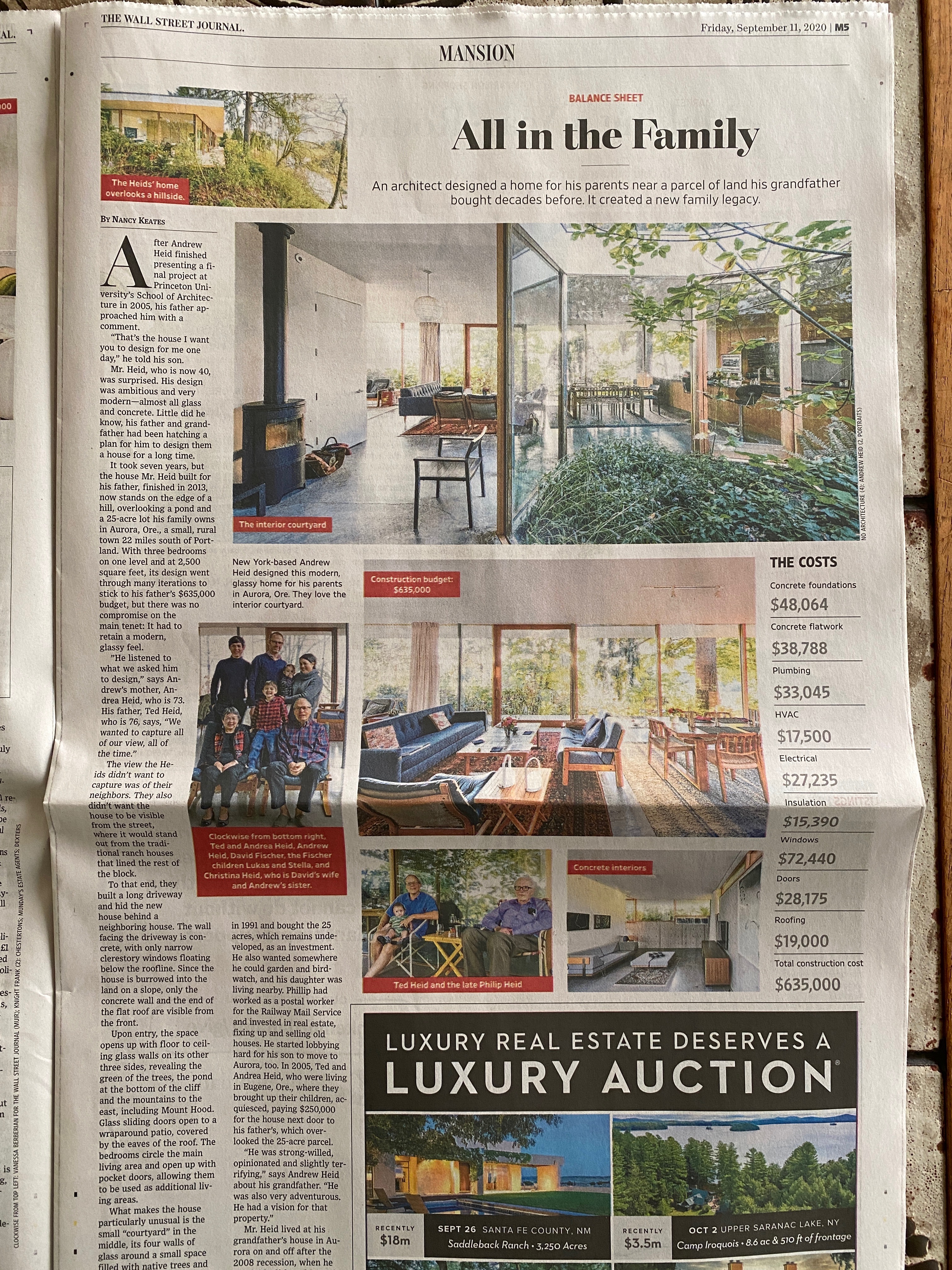
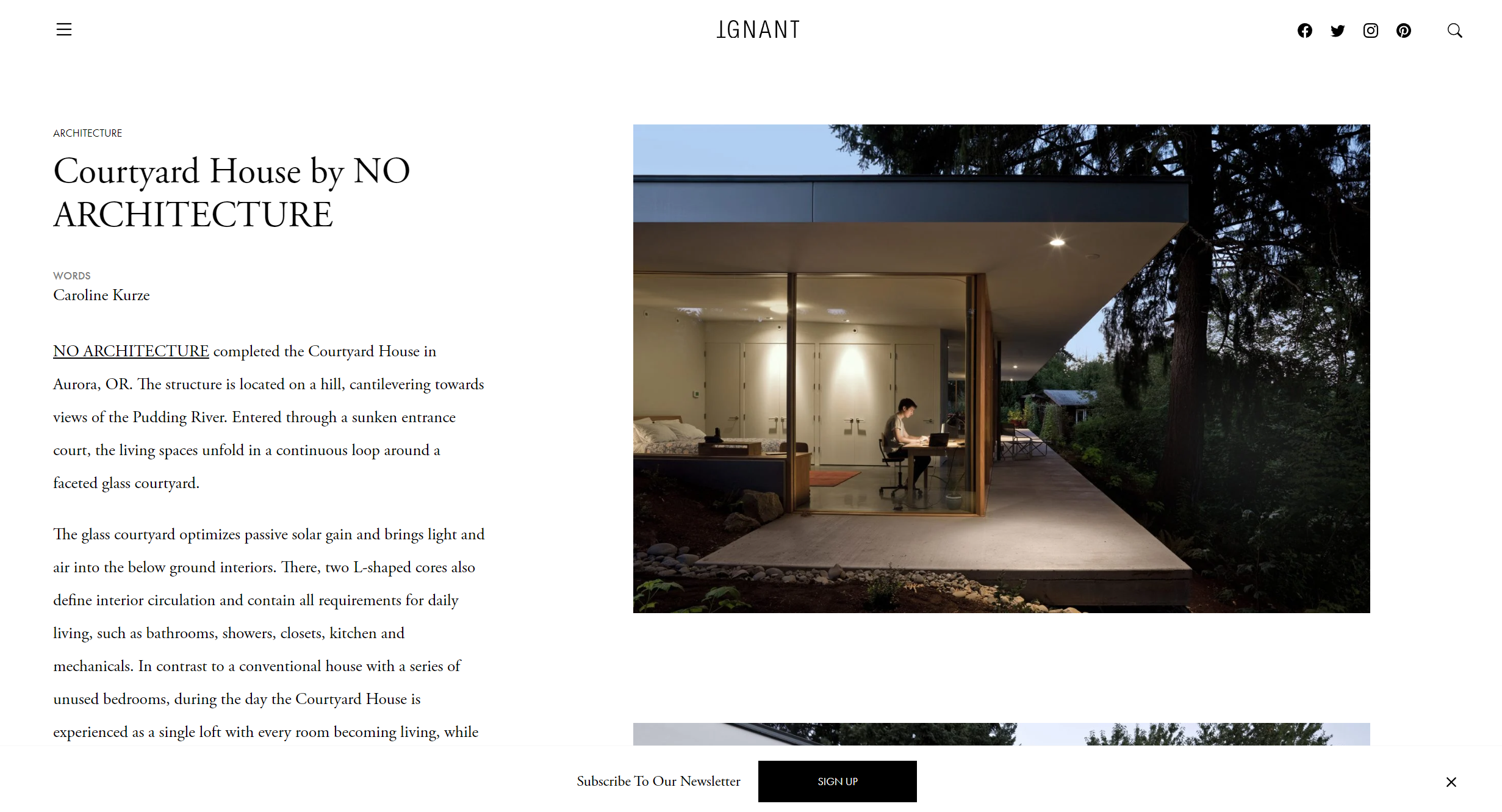
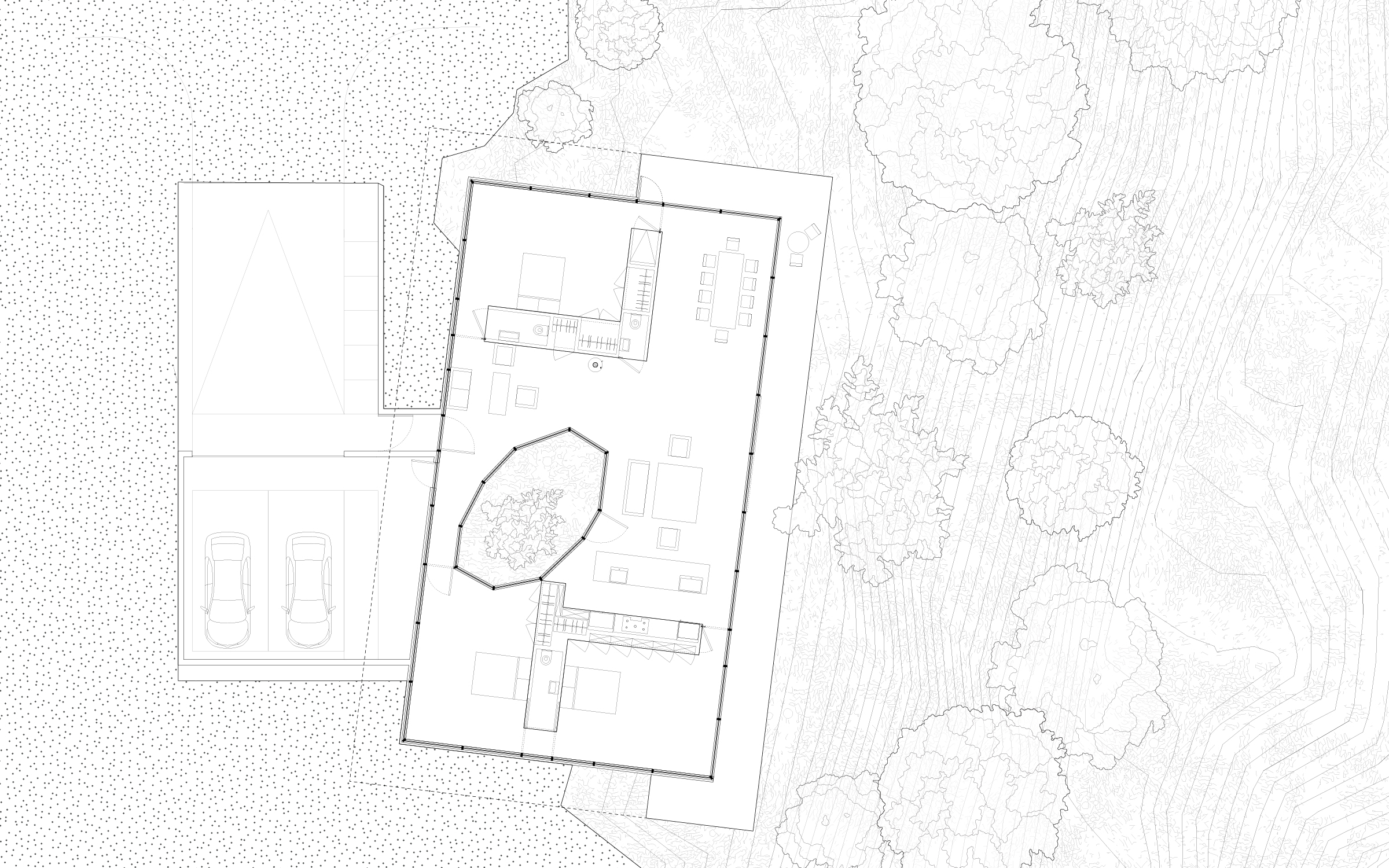
Courtyard House is organized around an excavated inner garden that makes landscape the first room of domestic life. Set on an urban infill site in Aurora, Oregon, overlooking protected wetlands, the house reconciles two desires often treated as opposites: to live in close contact with nature and to remain connected to community. Rather than retreating to a remote site, the project buries itself into the hillside along the street and neighboring homes, while opening eastward toward expansive views of field, pond, and river below. In this way, the house disappears into both landscape and town, framing ecological processes and human life rather than presenting itself as an object.
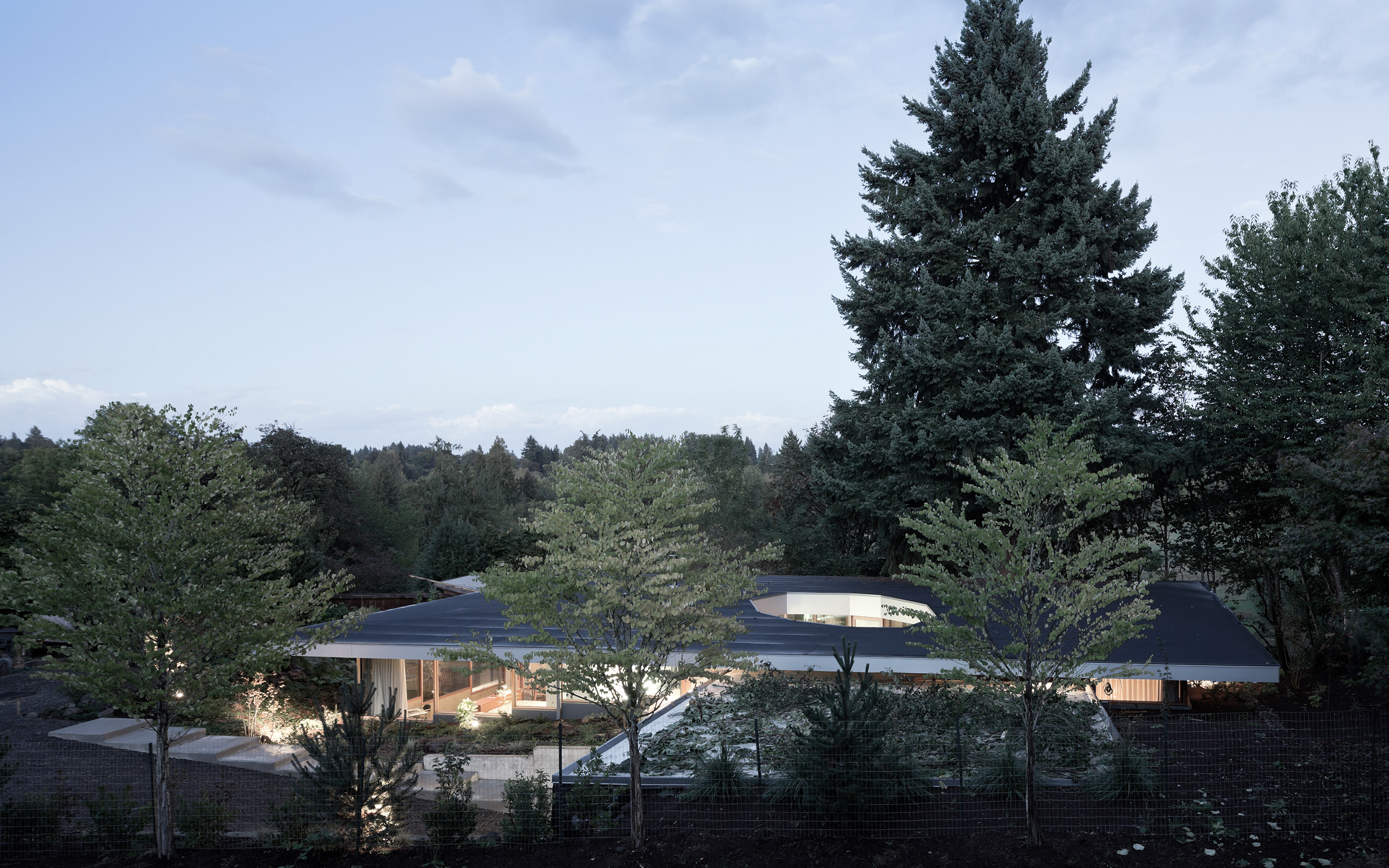

RESOLVE TENSIONS BETWEEN HARMONIOUSLY “AGEING IN PLACE” WITH NATURE WHILE MAINTAINING AN URBAN DESIRE FOR COMMUNITY.

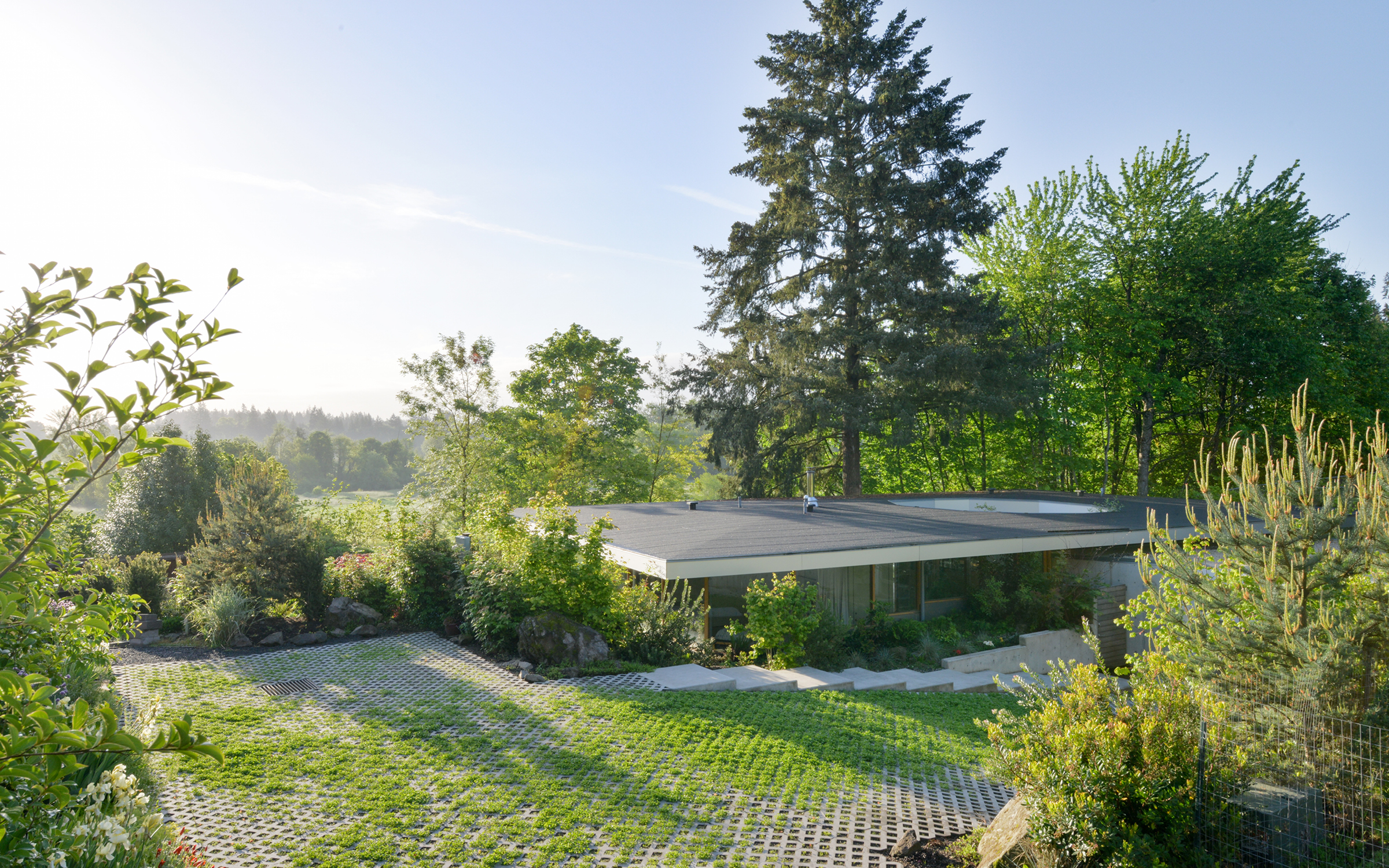

BURROWING THE HOUSE INTO THE LAND
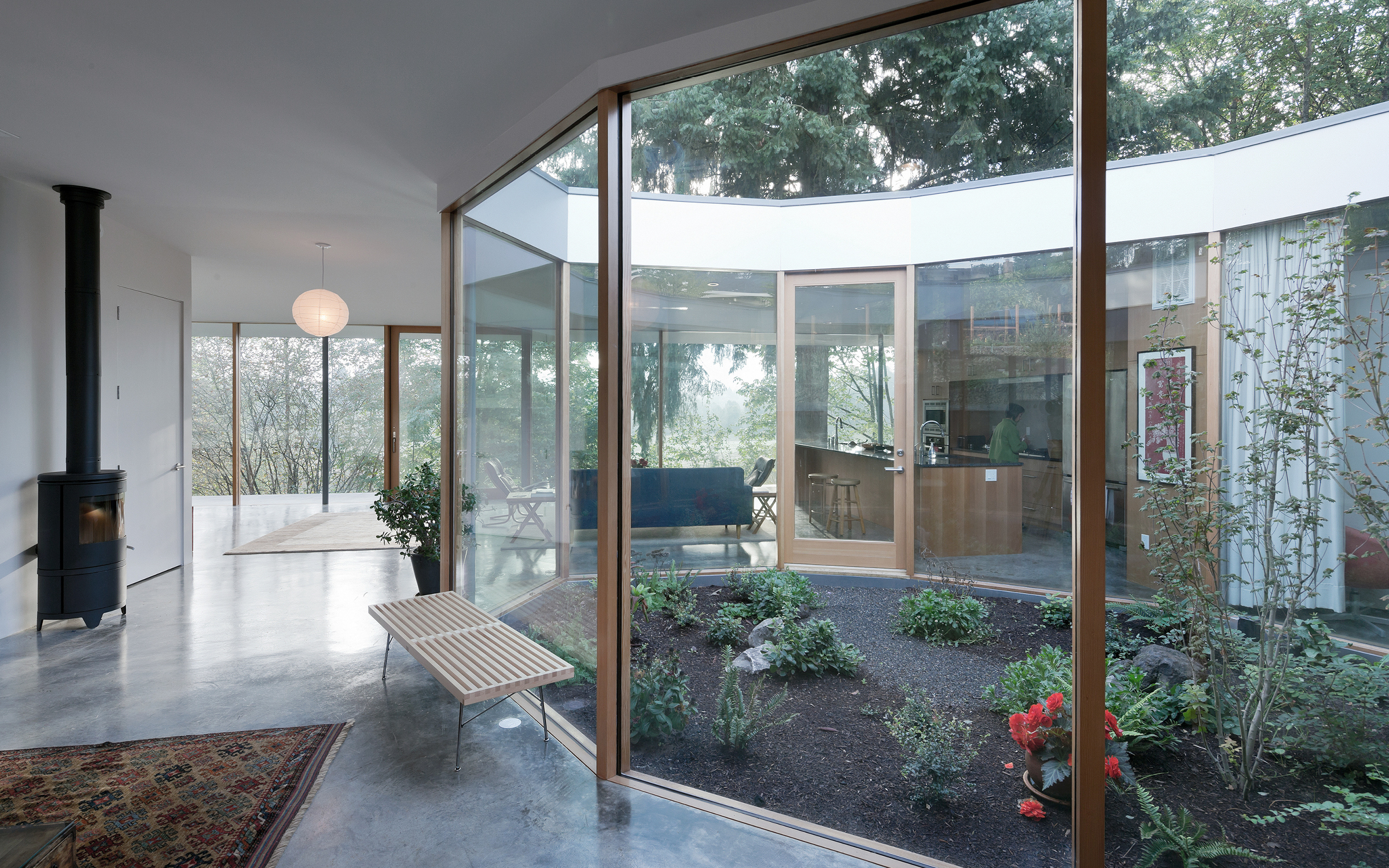
The project departs from the conventional room-and-corridor plan in favor of a continuous domestic loop shaped by a faceted glass courtyard and two L-shaped storage cores. The courtyard is not residual exterior space, but the project’s inner cause: it brings light, air, thermal stability, and orientation into the center of the plan while conceiving landscape as partition. The house is therefore not a container with a void inserted into it, but a perimeter condition produced by the void itself. This is what gives the project its spatial inevitability. The void is not absence, but structure.

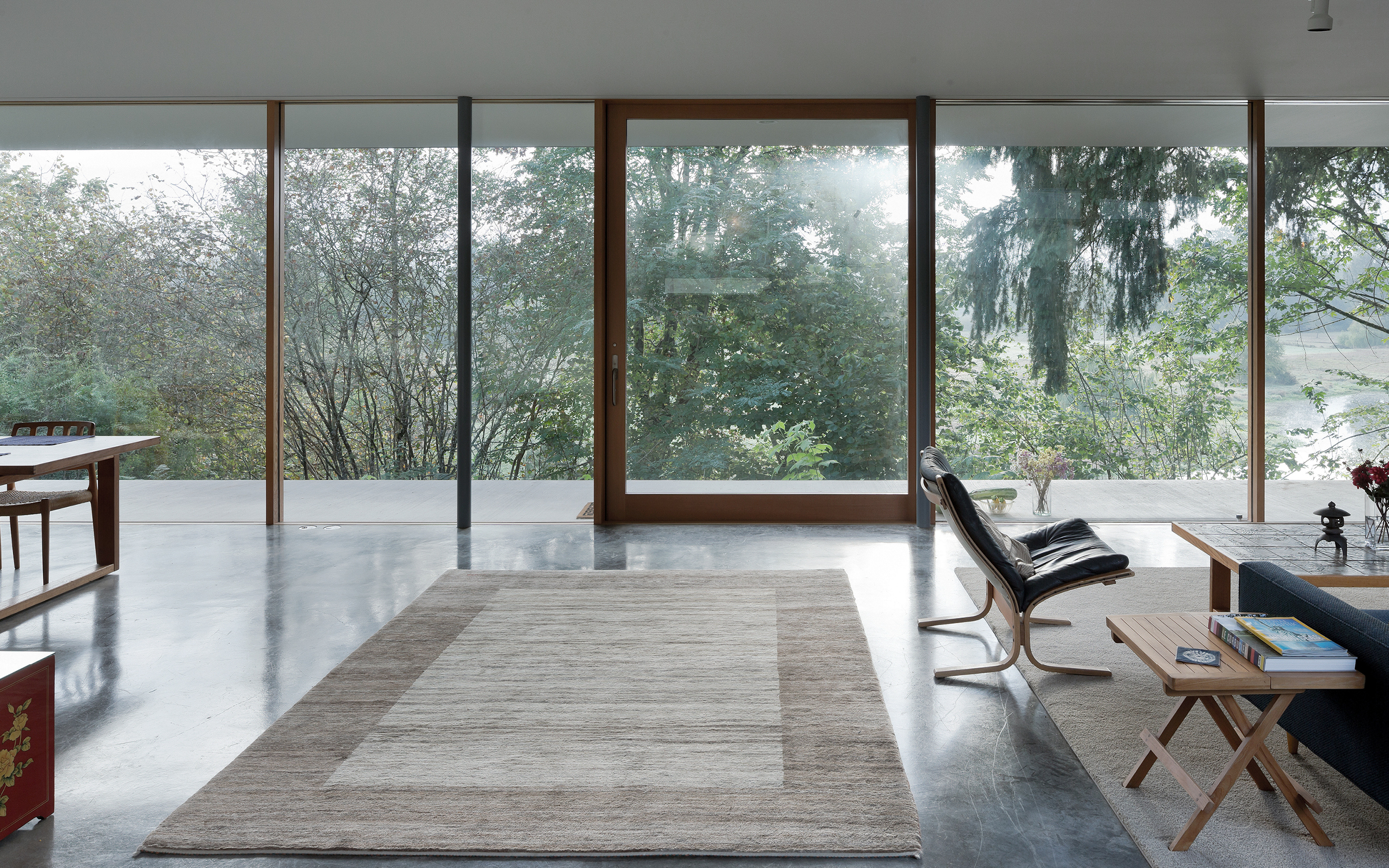
FRAMING THE VIEWS
By concentrating the rituals and infrastructure of daily life—toilets, showers, closets, kitchen, and mechanical systems—within two compact cores, the surrounding rooms remain open, adaptable, and socially connected. Each space can shift between communal and private use, allowing the house to support both the intimacy of daily life and the gathering of extended family and guests. A single-level plan, gentle ramp, covered terrace, roll-in showers, and accessible kitchen details make this flexibility inseparable from aging in place.
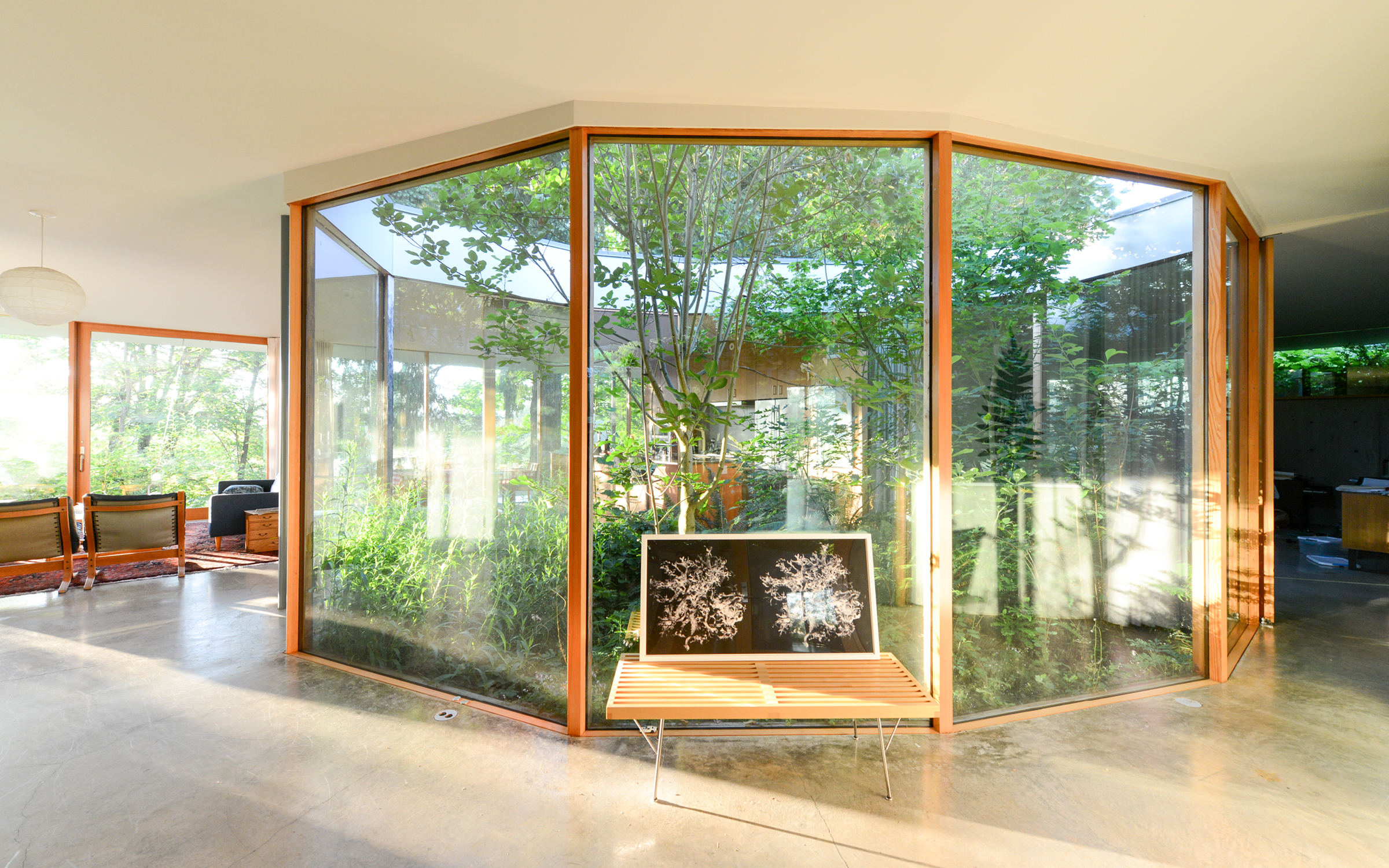

Constructively, the house is conceived as an urban infill canopy or umbrella structure: a single volume framed between floor and roof, with the service cores splitting and flipping the lateral bracing to differentiate the loft-like interior into programmatic alcoves along the perimeter. The glulam hipped roof, lightly carried by pipe columns, makes the architecture read less as a sealed mass than as a suspended climatic device. The courtyard’s environmental role is equally central, capturing winter sun, stimulating summer ventilation, and bringing fresh air and daylight deep into the excavated plan while the surrounding earth provides privacy and thermal insulation.
Courtyard House therefore establishes NO ARCHITECTURE spatial system: excavated terrain, central void, and canopy structure. It is not simply a house with a courtyard, but a prototype for an architecture in which landscape enters the center of life, infrastructure recedes, and dwelling becomes a continuous field between nature and community.
Courtyard House therefore establishes NO ARCHITECTURE spatial system: excavated terrain, central void, and canopy structure. It is not simply a house with a courtyard, but a prototype for an architecture in which landscape enters the center of life, infrastructure recedes, and dwelling becomes a continuous field between nature and community.


Team
Andrew Heid, Jack Hogan, Christopher Purpura, Noa Peer, Naiding Yao
Collaborators
WBS Construction Inc., Madden & Baughman Engineering, Inc., Aurora Landscape
Andrew Heid, Jack Hogan, Christopher Purpura, Noa Peer, Naiding Yao
Collaborators
WBS Construction Inc., Madden & Baughman Engineering, Inc., Aurora Landscape
Photography
Iwan Baan, Michael Weber
Distinctions
Highest Honor Award for 2017 from Boston Society of Architects / AIA New York Housing Award.
Iwan Baan, Michael Weber
Distinctions
Highest Honor Award for 2017 from Boston Society of Architects / AIA New York Housing Award.