
CLOUD FOREST
QIANHAI NEW CITY CENTER LANDMARKCULTURAL, CIVIC
Client China Merchant Group
Location Shenzhen, Guangdong Province, China
Program New city center, botanical garden, kunsthalle, multi-form theater, outdoor opera, cafes
Area 80,000 m² / 861,112 ft²
Status Commission, concept, finalist (of 126 teams)
Location Shenzhen, Guangdong Province, China
Program New city center, botanical garden, kunsthalle, multi-form theater, outdoor opera, cafes
Area 80,000 m² / 861,112 ft²
Status Commission, concept, finalist (of 126 teams)
A VERTICAL GROVE FOR THE CITY
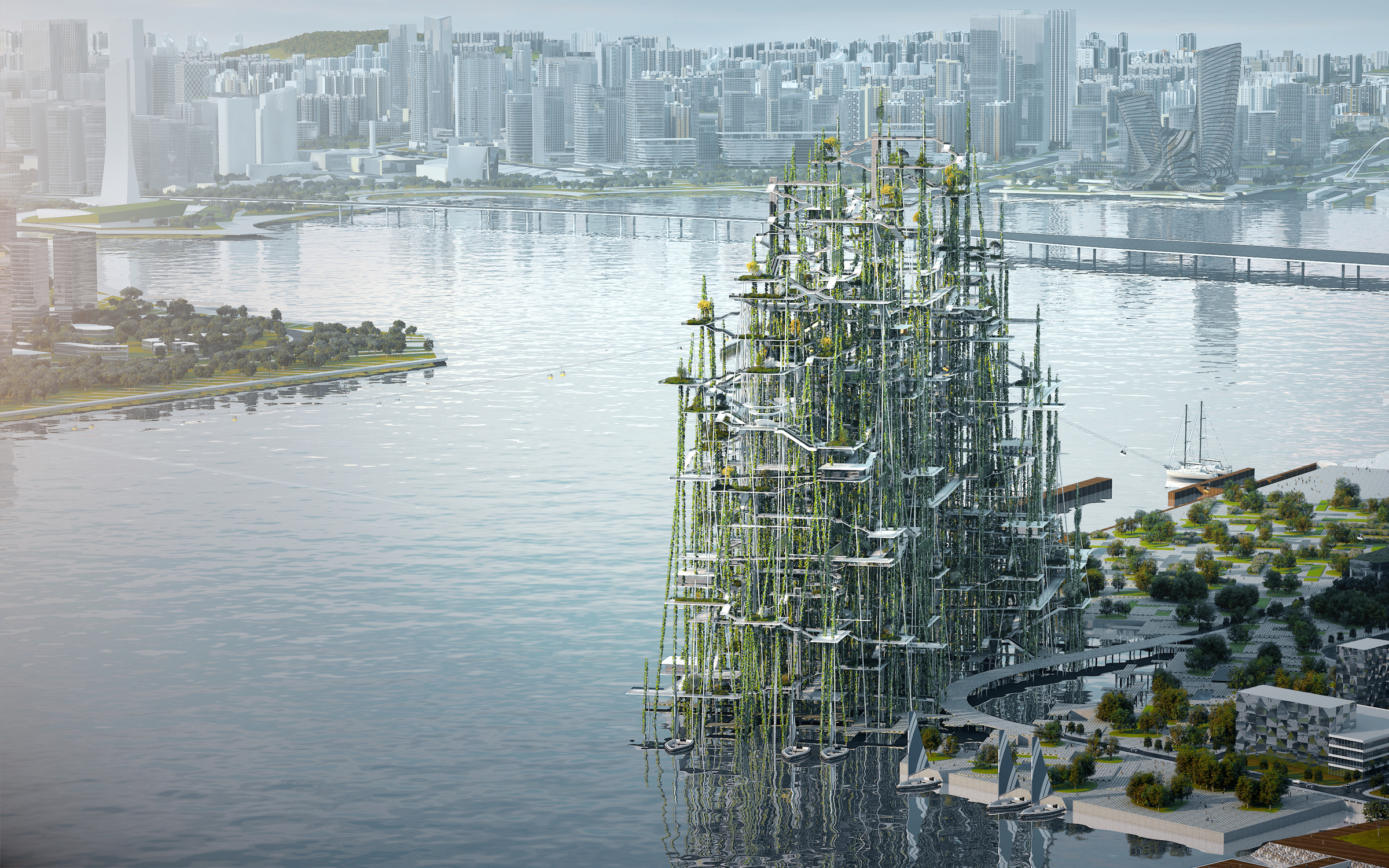
Cloud Forest transforms the civic landmark into a vertical grove, where structure, garden, water, shade, art, and collective life become one immersive spatial order.
Located in Qianhai New City Center in Shenzhen, the project begins with a question: how can a contemporary urban landmark become more than an icon? Rather than producing a singular object on the skyline, Cloud Forest creates a porous civic landscape lifted into the air. It gathers botanical gardens, cultural programs, public platforms, theaters, outdoor performance, cafes, and shaded gathering spaces into a vertical field of occupation.
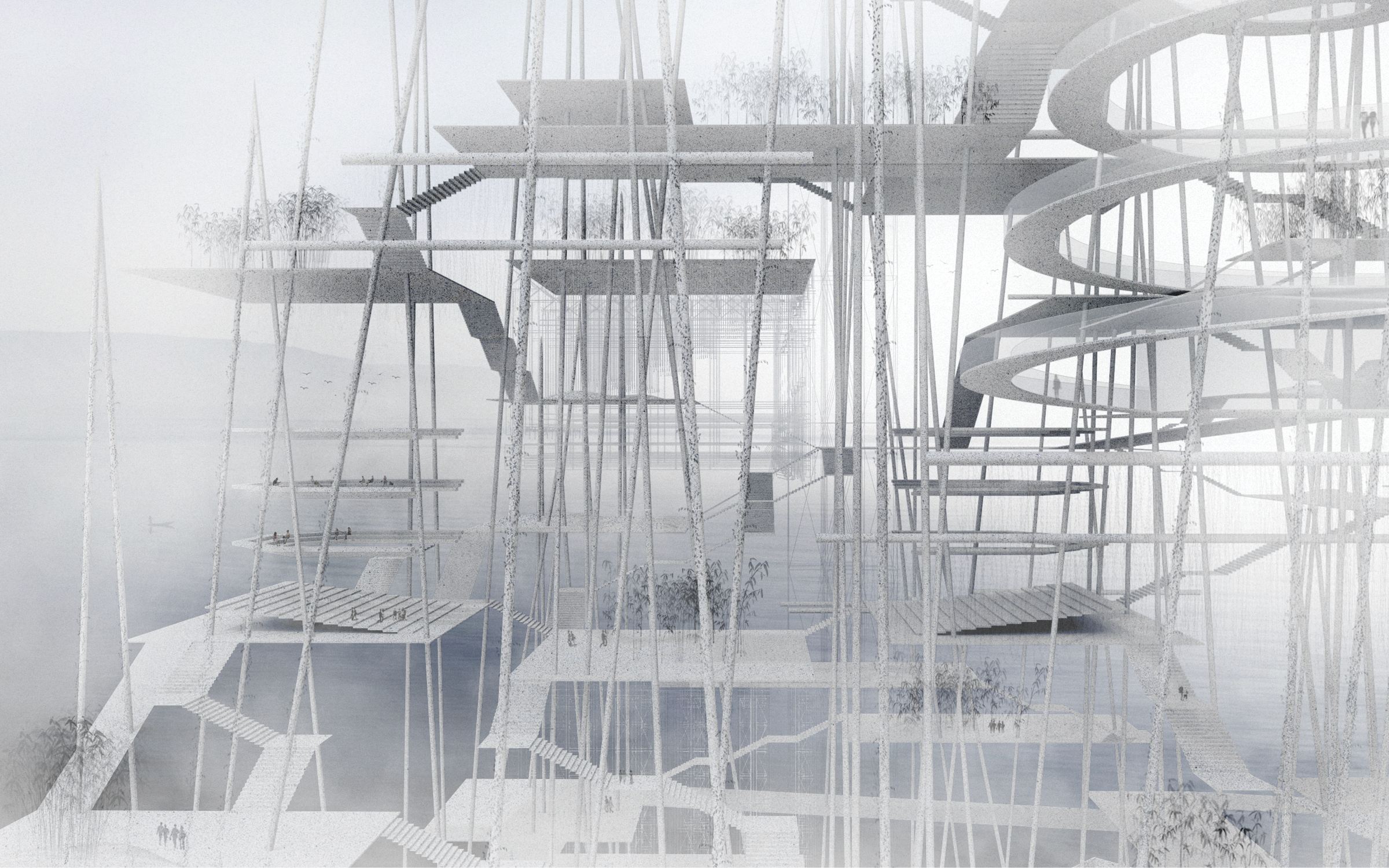
The project is not conceived as a tower in a park. It is a forest-like structure for public life. Platforms, gardens, bridges, and diagonal structural members form a three-dimensional civic terrain, allowing people to move between city, water, vegetation, art, and sky. The landmark becomes less a fixed image than an inhabitable atmosphere.
Cloud Forest gives Qianhai a new form of urban nature: not landscape as decoration around architecture, but landscape as the architecture itself.
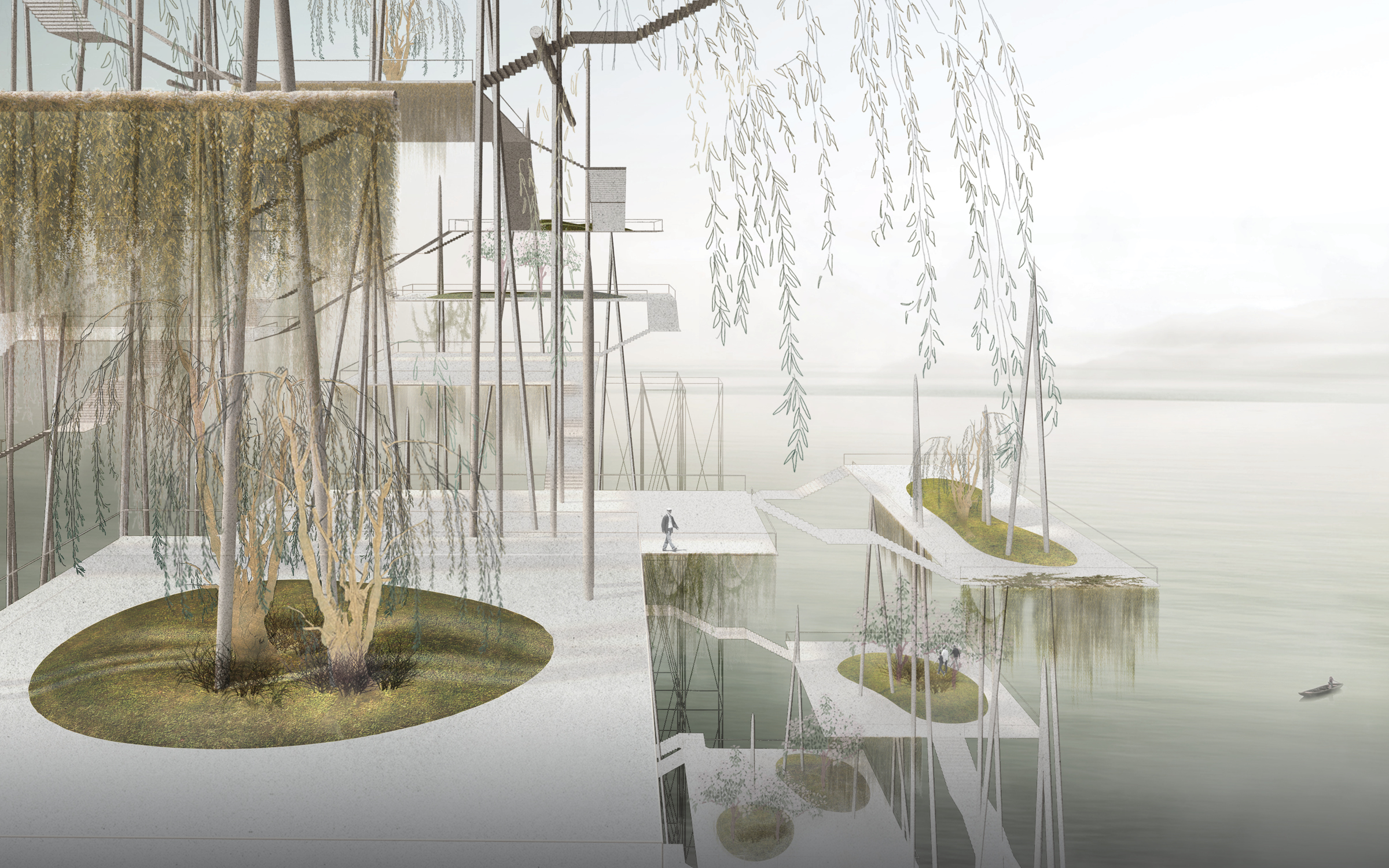

A CIVIC LANDSCAPE BETWEEN WATER AND SKY
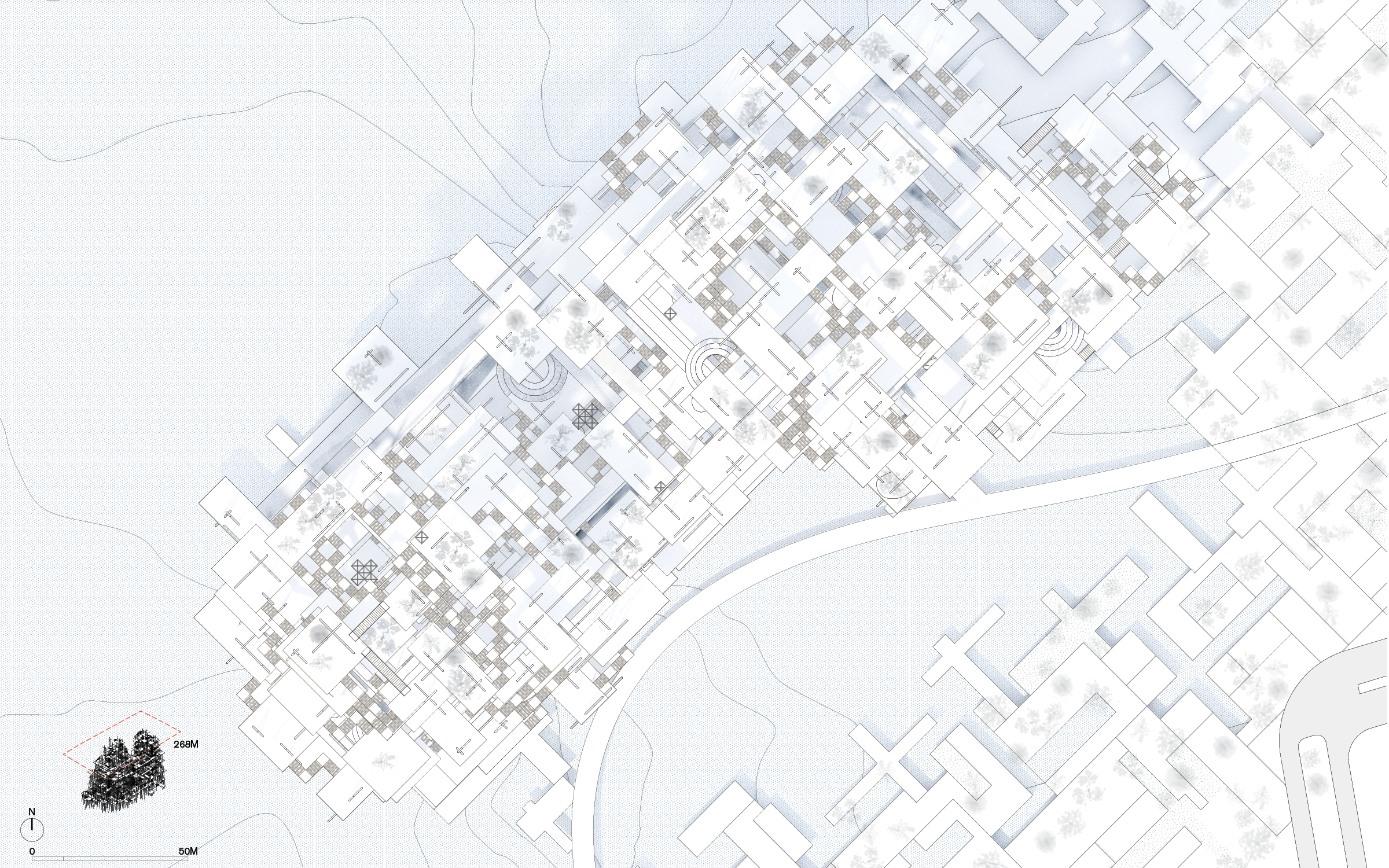
The project is situated within a larger coastal condition shaped by mangroves, tidal waters, reclaimed land, and the expanding urban fabric of Shenzhen. Cloud Forest responds by constructing a public framework where water, ecology, culture, and movement are brought into relation.
At the ground, the landscape is conceived as an archipelago of civic and ecological rooms. Rice paddies recall the agricultural history of the region and Shenzhen’s origins in alluvial floodplain landscapes. Gei wai and polyculture pond systems extend the memory of fish and shrimp farming into a contemporary public environment. Plazas, gardens, shaded pavilions, and visitor services create places of rest, gathering, learning, and orientation.
This ground is not a base for an object above. It is the beginning of the project’s spatial order. From the water edge upward, the project transforms ecological memory into civic structure. The city center becomes a place where environmental history, public life, and cultural experience are gathered into one continuous landscape.
STRUCTURE AS FOREST
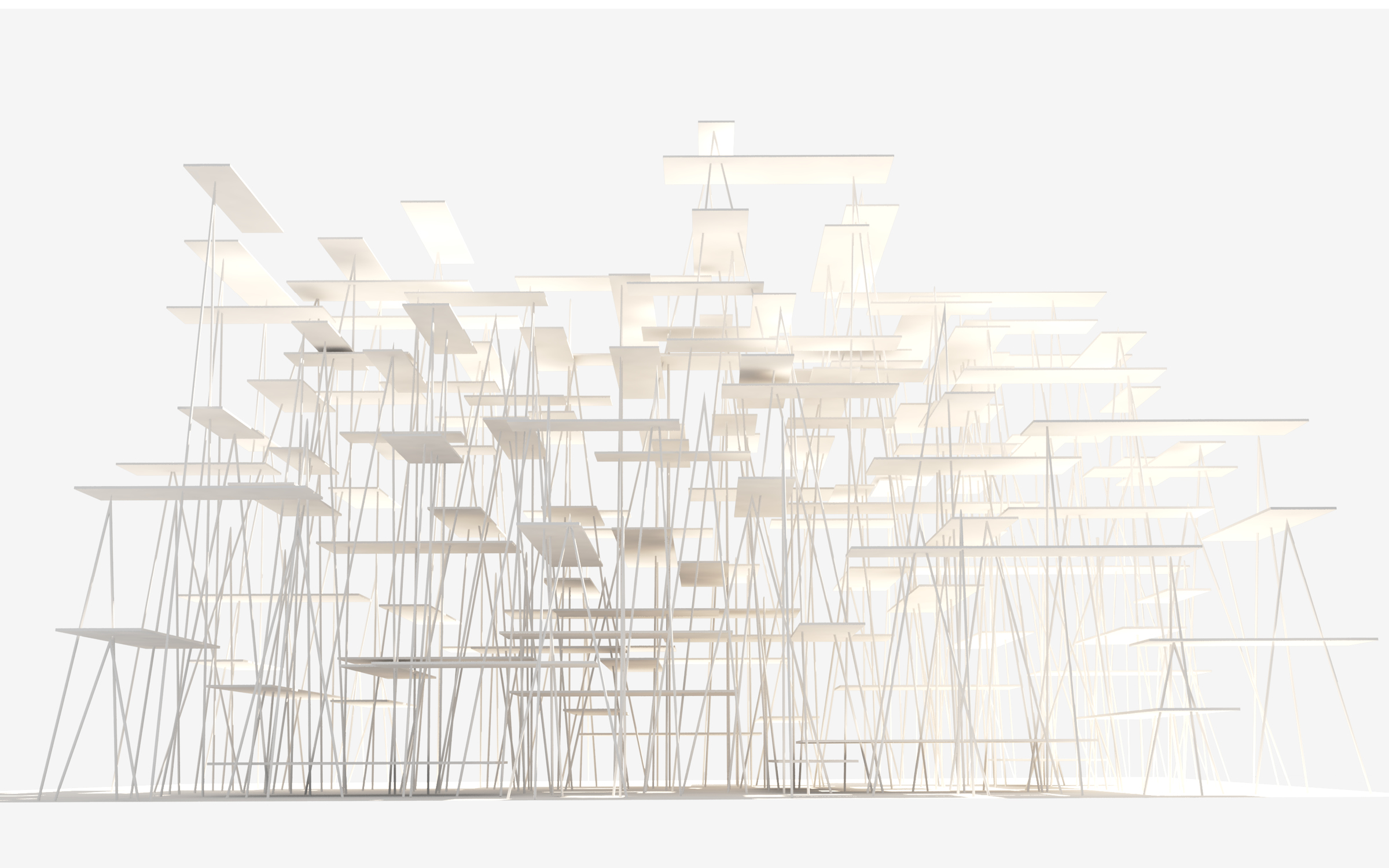
Cloud Forest replaces the conventional logic of the tower with the logic of the grove. Instead of a heavy central core and repeated vertical floor plates, the project is formed from a field of slender diagonal members and inhabited platforms. Structure becomes spatial atmosphere.
Like bamboo, the structural system is light, repetitive, porous, and collective. Hundreds of thin diagonal supports create a cloud-like frame that holds gardens, bridges, theaters, terraces, and cultural rooms. The building is not supported by a single monumental gesture. It is held by a distributed order.
This structural field allows the project to remain open. Light passes through it. Air moves through it. Views are filtered rather than fixed. Vegetation grows within it. People move through it at multiple levels. Structure becomes more than engineering; it becomes the spatial condition through which the city encounters shade, garden, culture, and sky.
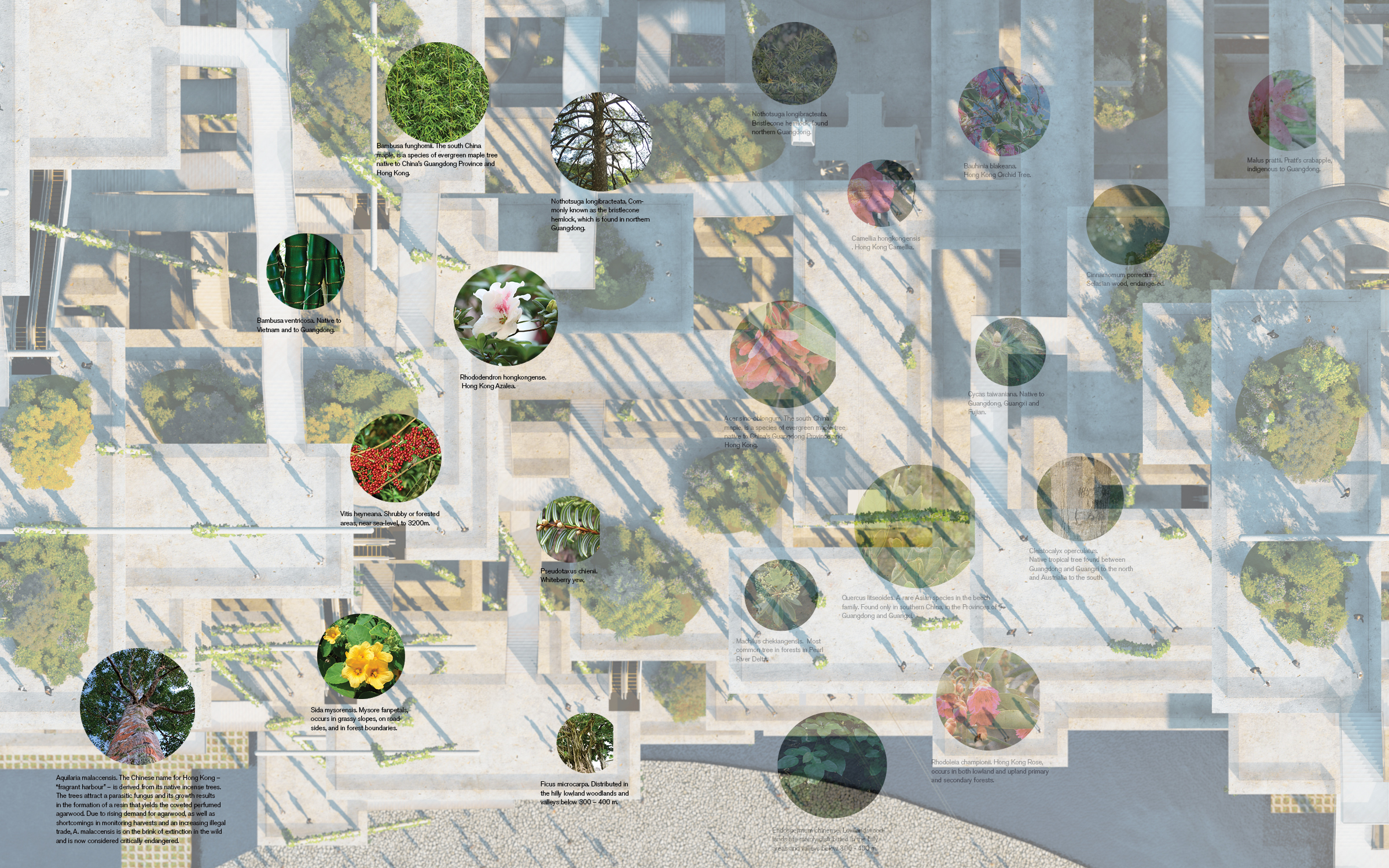
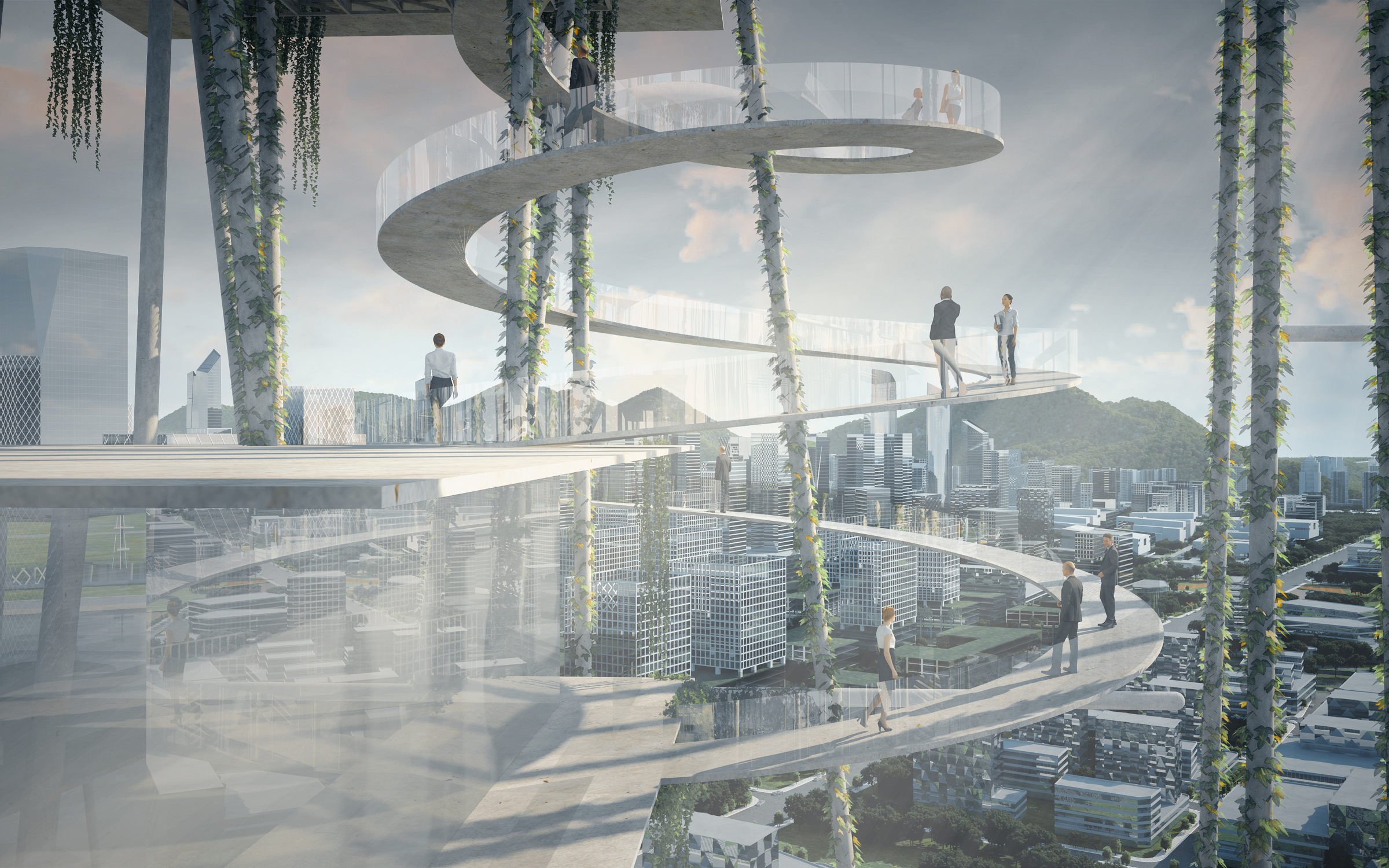
NINETY-FIVE PERCENT VOID
Cloud Forest is conceived as a radically porous landmark. Its most important material is not mass, but void. The 150-meter-tall structure is largely open, allowing air, light, vegetation, movement, and public life to occupy the space where a conventional tower would be solid.
This void is not emptiness. It is the space where relations gather. Garden platforms, bridges, theaters, art spaces, and civic rooms are suspended within a larger atmospheric field. The project creates a free plan and free section, allowing program, movement, structure, and landscape to interweave vertically.
The void gives the project its civic generosity. It allows the landmark to be entered, crossed, inhabited, and shared. It also allows the city, sea, mountain, sky, and vegetation to remain present within the architecture. Cloud Forest becomes a room for the larger environment rather than an object set apart from it.
GARDEN PLATFORMS AND CULTURAL ROOMS
The project gathers diverse public programs into a sequence of elevated gardens and cultural spaces. Botanical gardens, kunsthalle galleries, a multi-form theater, outdoor opera, cafes, terraces, and public walks are distributed across the vertical structure.
Each platform becomes a different relationship between nature and collective life. Some spaces are shaded and intimate. Others open outward toward the city, water, and mountains. Some support performance and gathering. Others allow quiet observation, garden experience, or movement between programs. Together, they form a civic world of changing atmospheres.
The garden is not used as visual softness. It is the organizing structure of the project. Vegetation shapes shade, threshold, air, view, movement, and public encounter. Art and landscape are not separated into distinct zones; they are interwoven into one spatial sequence.

A NEW URBAN CLEARING
Cloud Forest creates a clearing within the density of the contemporary city. It does not withdraw from urban life, and it does not compete with the city through spectacle. Instead, it creates a place where public life can gather inside a larger order of climate, ecology, culture, and horizon.
The project brings together social, ecological, and spiritual dimensions of civic space. Socially, it creates platforms for gathering, performance, learning, rest, and encounter. Ecologically, it works through shade, water, vegetation, porous structure, and environmental memory. Spiritually, it reconnects the city to sea, mountain, sky, and atmosphere.
The landmark becomes a world within the world: open enough to receive the city, ordered enough to orient public life, and porous enough to remain connected to climate and landscape.


ATMOSPHERE AS SPATIAL STRUCTURE
Cloud Forest transforms atmosphere into architecture. Shade, mist, vegetation, filtered light, tidal memory, elevated paths, diagonal structure, and public movement become the project’s primary materials.
The result is not simply a cultural building, botanical garden, or urban landmark. It is an immersive civic landscape between ground and sky. Through void, canopy, garden, horizon, and movement, Cloud Forest turns nature into spatial structure at the scale of the city.
Cloud Forest proposes a new kind of landmark: not an icon to be looked at, but a vertical public landscape to be inhabited.

Team
Ziwei Deng, Andrew Heid, Christopher Purpura, Guangyu Wang, Xiangxiang Wang, Chenxian Wu, Juliana Yang, Zhangzheng Yang
Ziwei Deng, Andrew Heid, Christopher Purpura, Guangyu Wang, Xiangxiang Wang, Chenxian Wu, Juliana Yang, Zhangzheng Yang
Collaborators
Engineering: Arup
Distinctions Shortlisted Finalist
Engineering: Arup
Distinctions Shortlisted Finalist